Your First Autocross: What to Expect and How to Prepare
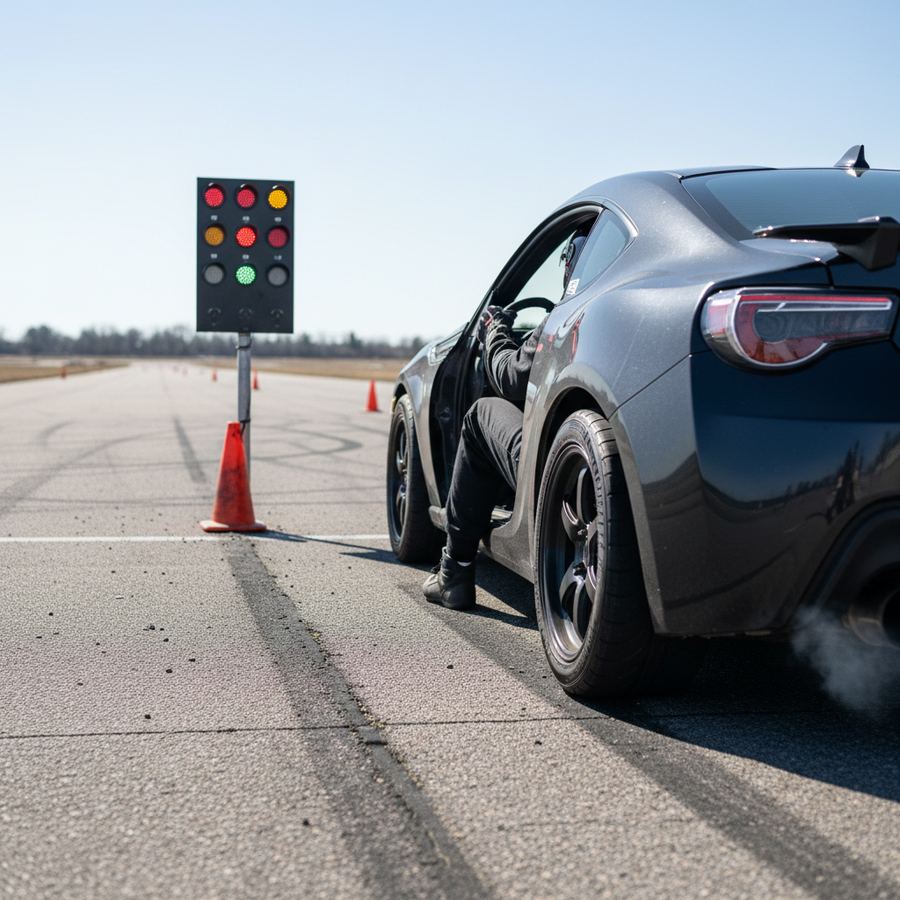
Autocross is the simplest, cheapest, and safest way to find out what your car can actually do. You drive a cone course in a parking lot, one car at a time, at speeds that rarely break 60 mph. Nobody is next to you. Nobody is coming the other way. If you mess up, you hit a rubber cone and it bounces off. That is the whole risk profile.
If you have a car, a helmet, and about $40-60 in entry fees, you can do this tomorrow. Here is exactly what to expect.
Before You Show Up
Registration
Most autocross events use MotorsportReg.com for online registration. You will create an account, find your local region's event, and sign up. Registration often closes the night before, so do not wait until the morning of. Some clubs accept walk-up entries, but spots can fill. Register online and skip the stress.
You will pick a car class during registration. If you have no idea what class your car belongs in, choose "Novice" or the catch-all street class. Nobody will give you trouble for picking wrong. The organizers will help you sort it out at the event.
What Your Car Needs
Your daily driver is almost certainly fine. It needs to pass a basic tech inspection, which checks for safety, not performance. Here is what they look for:
- Battery secured (no zip ties holding it down)
- No loose objects in the cabin (floor mats, water bottles, phone mounts - take them all out)
- Tires with adequate tread and no sidewall damage
- No fluid leaks
- Lug nuts tight
- Brake lights working
- Throttle pedal returns on its own when released
Convertibles need either a factory hardtop or a roll bar. Soft tops alone will not pass at most events. Check with your local club if you drive a convertible.
What You Need
A helmet rated Snell SA2015 or newer, or M2015 or newer. Many clubs rent helmets for $5-10, so you do not need to buy one before your first event. Call or email the organizer ahead of time to confirm loaners are available.
Wear closed-toe shoes with thin soles. Running shoes or driving shoes work well. Boots and sandals do not. Wear comfortable clothes that you can move in. Long pants are smart but not always required.
Bring water, sunscreen, a folding chair, and snacks. You will be outside for several hours. A tire pressure gauge is helpful but not critical on your first day.
The Day Itself
Arrival and Check-In
Get there early. Most events have check-in starting around 8 AM, with the first car off at 9 or 10. You will sign a waiver, pick up your car number (usually written on painter's tape stuck to your windows), and get directed to the paddock area where everyone parks and preps.
Tech Inspection
Drive your car to the tech line. A volunteer will walk around your car, pop the hood, check the items listed above, and slap a "tech passed" sticker on your windshield. The whole process takes about three minutes. If something fails, they will tell you what to fix. Most issues are solved by removing loose objects from the cabin.
The Course Walk
This is the most important part of your day. Before anyone drives, the course is open for walking. Grab the course map (usually posted on a board near registration) and walk the entire thing on foot. Do it at least twice.
On your first walk, just figure out where the course goes. Follow the cones. On your second walk, start thinking about where you want the car to be. Look for places where you can carry speed and places where you need to slow down. The standing cones on your left define your path. Pointer cones (laid on their side) indicate direction changes.
If you are confused about the course layout, ask someone. Experienced drivers love explaining this stuff. It is not a secret competition - everyone wants you to have a good time.
Timed Runs
Autocross is run in heats. Half the group drives while the other half works the course (picking up knocked-over cones, flagging, etc.). You will typically get 3-6 timed runs per heat, each lasting 40-90 seconds depending on the course.
When it is your turn, you stage at the start. The starter will wave you forward. You launch when the timing light goes green (or when the starter drops a flag). Then you drive the course as fast as you can figure out, cross the finish beam, and loop back to the staging area for your next run.
Your time gets recorded electronically. Each cone you knock over adds a two-second penalty. Missing a gate entirely is a DNF (Did Not Finish). Your best time of the day is your competition time.
Working the Course
When you are not driving, you stand at an assigned station on course. Your job is to stand up any cones that get knocked over, put them back on their marked spots, and radio in penalties. This is not busywork. Watching other drivers from the course gives you a close-up view of different lines and techniques. Pay attention. You will learn a lot standing out there.
What Happens When You Spin
You will probably spin. Most beginners do, usually at least once. Here is the procedure: when the car starts rotating beyond your control, push the clutch in (or take your foot off the gas in an automatic) and press the brake. The car will stop. You will be sitting sideways in a parking lot surrounded by rubber cones. Nothing bad happened.
Take a breath, straighten the wheel, and continue on course. You will get a time penalty, but nobody cares about your time on day one. The corner workers might give you a thumbs up. Spinning means you were pushing, and pushing is how you learn where the limits are.
After Your Runs
Check the timing board or results sheet. Compare your times across your runs. You should see improvement from your first run to your last. A two- or three-second improvement across the day is completely normal for a first-timer.
Talk to people. Ask a fast driver if you can ride along during the fun runs that some clubs hold at the end of the day. Ask what they saw you doing. The autocross community is genuinely welcoming to new people, because every single person there remembers their own first event.
Cost Breakdown
Your first autocross will cost roughly $40-60 for the entry fee, $0-10 for a helmet rental, and whatever gas it takes to get there. If your car is in reasonable shape, you do not need to spend anything on it. This is the cheapest form of motorsport that exists. For the cost of a nice dinner, you get a full day of driving your car at its limits in a controlled environment. If you are exploring grassroots motorsports for the first time, autocross is the obvious starting point.
What to Do Next
Go to a second event. Your first autocross teaches you what autocross is. Your second one is where you actually start learning to drive. From there, you might get curious about track days, or discover that rallycross sounds more your speed. Use our guide to finding events near you to locate your local SCCA region or club. Most regions run autocross events every two to four weeks from spring through fall.
The car you already own is almost certainly enough. The skills you need, you will build by doing. The only thing left is to register for an event and show up.