Getting Into Grassroots Motorsports: Where to Start
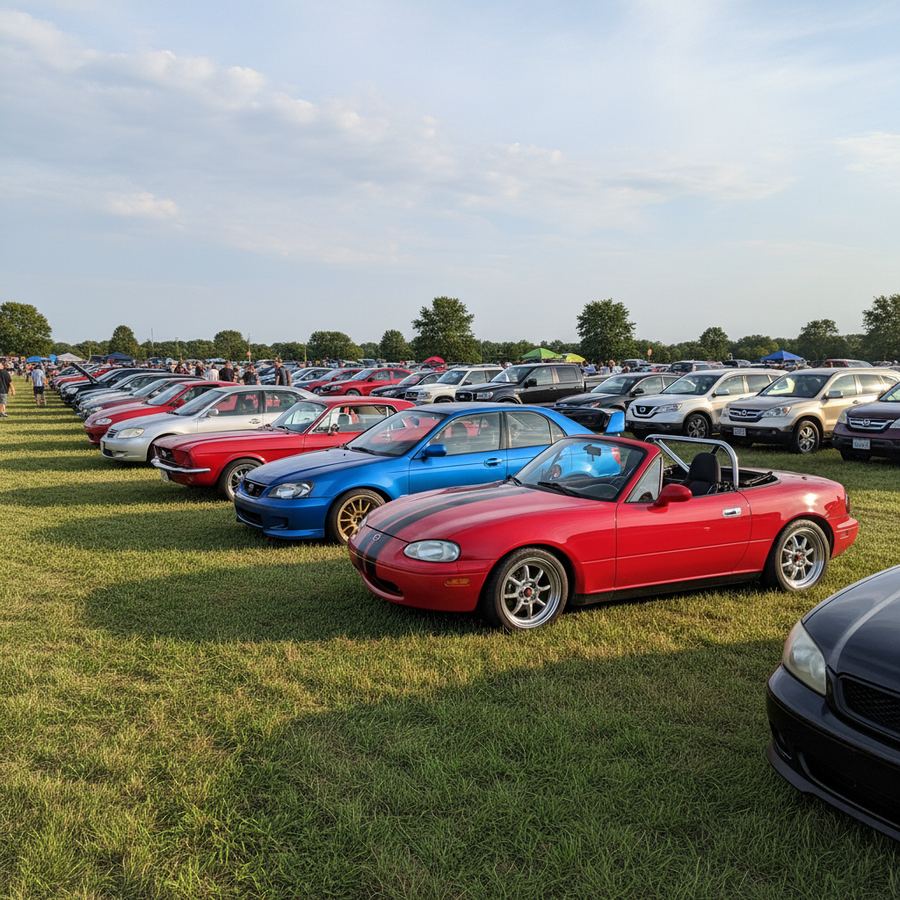
Grassroots motorsports is the broad term for organized car events that regular people with regular cars can actually participate in. Not Formula 1. Not NASCAR. The stuff that happens in parking lots, at county fairgrounds, on small regional tracks, and in the parking lots of coffee shops on Saturday mornings. The price of entry is your existing car and some free time.
If you have been watching from the outside and wondering how to get involved, this is your map. Here are the main entry points, what each one costs, and which one makes sense to try first.
Autocross
Autocross is a timed driving event on a cone course, typically set up in a large parking lot. One car runs at a time. Speeds rarely exceed 60 mph. You get 3-6 timed runs of about 60-90 seconds each, and your best time is your result. The whole event takes a Saturday morning and afternoon.
Cost per event: $40-60 entry fee. Helmet rental available at most events for $5-10.
What you need: Any car that runs and passes a basic safety inspection. A helmet (Snell SA or M rated). Closed-toe shoes. That is it.
The experience: Controlled, safe, and focused on precision. You learn how your car handles at the limit on dry pavement. The competition is real but friendly. It is the most accessible competitive motorsport event available.
Best for: People who want to compete, who like precision, and who want to learn car control on pavement. Read our full first autocross guide for everything you need to know before showing up.
Track Days (HPDE)
HPDE (High Performance Driver Education) puts you on a real racetrack with instruction. You are not racing anyone. You are learning how to drive a track: braking points, turn-in points, racing lines, and flag communication. A qualified instructor rides in your car and coaches you through each session.
Cost per event: $150-350 for a single day. Plus fuel (track driving burns through gas) and possibly fresh brake pads and fluid.
What you need: A car in solid mechanical shape, especially brakes. An SA-rated helmet. Long pants and closed-toe shoes. Some organizations require a fire extinguisher mounted in the car.
The experience: The most educational option on this list. You will learn more about driving in one track day than in years of street driving. The speeds are higher, the stakes feel bigger, but the instruction keeps you within safe limits. After a track day, you drive better everywhere.
Best for: People who want to learn to drive well, who enjoy coaching, and who are willing to spend a bit more. Our track day basics guide covers the format in detail.
Rallycross
Rallycross is autocross on dirt. You drive a cone course on a natural surface (dirt, gravel, grass, mud) one car at a time. The car slides. A lot. The speeds are lower than autocross, but the driving is more chaotic because the surface has about a third of the grip that pavement offers.
Cost per event: $30-60 entry fee. Minimal car preparation needed.
What you need: Any car. Seriously, any car. Front-wheel-drive, all-wheel-drive, rear-wheel-drive. Stock tires, stock everything. A helmet. Old clothes and shoes you are willing to get muddy.
The experience: Pure fun. Rallycross is less precise than autocross and less technical than a track day, but it is the most immediately enjoyable. You spend most of your time sliding sideways through dirt, and it never stops being entertaining. The community is laid-back and nobody takes themselves too seriously.
Best for: People who want maximum fun with minimum investment. People who do not mind washing their car afterward. See our rallycross guide for the full picture.
Car Meets and Cars & Coffee
Car meets are exactly what they sound like: a group of car enthusiasts meeting in a parking lot to look at each other's vehicles, talk about builds, and hang out. Cars & Coffee is the most common format, typically held on Saturday or Sunday mornings at a shopping center, coffee shop, or similar venue.
Cost per event: Free. Maybe you buy a coffee.
What you need: A car you want to show. Or no car at all. You can walk around and look at other people's builds. Nobody checks credentials.
The experience: Social, low-pressure, and a great way to meet local car people. You will see everything from bone-stock daily drivers to full race cars. Conversations start easily because everyone has at least one thing in common. If you want to find out about local driving events, car meets are where that information flows freely.
Best for: Complete beginners who want to connect with the community before committing to a competitive event. People who enjoy the car culture as much as the driving.
Cruise Nights and Group Drives
Cruise nights are organized group drives on public roads, usually along a scenic route. They are not competitive and not timed. The group drives at legal speeds (or close to it), stops at a destination for food or photos, and drives back. Some car clubs organize monthly cruise nights with set routes.
Cost per event: Gas money and maybe dinner at the destination.
What you need: A car. A willingness to follow the group's pace and not be the person who ruins it by driving like an idiot on public roads.
The experience: Relaxed and enjoyable. Good roads, good company, and your car doing what it was built to do. Cruise nights are where friendships form and where you hear about autocross events, track days, and rallycross from people who already do them.
Best for: People who want to enjoy their car socially without any competitive pressure.
Cost Comparison at a Glance
| Activity | Entry Cost | Car Prep | Gear Needed | Total First Event |
|---|---|---|---|---|
| Car Meet / Cars & Coffee | Free | None | None | $0-5 |
| Cruise Night | Free | None | None | $10-20 (gas) |
| Rallycross | $30-60 | Minimal | Helmet (loaner OK) | $40-75 |
| Autocross | $40-60 | Minimal | Helmet (loaner OK) | $50-75 |
| Track Day (HPDE) | $150-350 | Brakes, fluid | SA helmet required | $200-450 |
Which One Should You Try First?
If you have never done anything like this, start with a Cars & Coffee or car meet. It costs nothing, requires nothing, and connects you with people who can point you toward the right next step.
If you want to actually drive competitively, start with autocross. It is the lowest risk, lowest cost, and most forgiving competitive format. You learn a lot about your car in a completely safe environment, and the skills you build transfer directly to every other form of motorsport.
If you want maximum fun and do not care about competition, go straight to rallycross. Nothing else in grassroots motorsports delivers that much entertainment for that little money.
If you want serious driver education and do not mind spending more, book a track day. The instruction alone is worth the price, and the skills you gain will make you a fundamentally better driver.
There is no wrong choice. Every one of these entry points leads to the same community of people who like cars and like driving them. Once you show up to one event, you will hear about three more. That is how grassroots motorsports works. One event becomes a hobby, and the hobby becomes a calendar full of weekends where you are actually using your car for what it was designed to do.
Ready to find something near you? Our guide to finding events shows you exactly where to look.