What Makes a Shop Enthusiast-Friendly
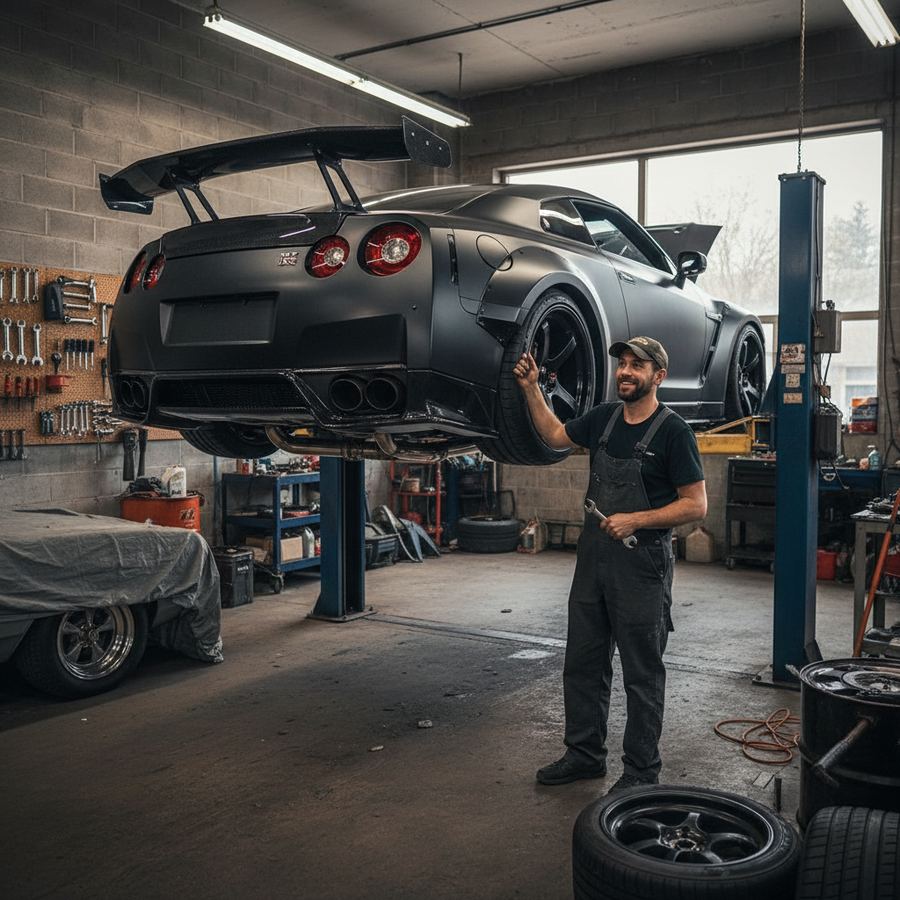
Finding a good mechanic is hard enough for a regular car. Finding one that understands enthusiast cars, the ones that get driven at events, have modified suspensions, or run performance brake compounds, is a completely different challenge. Most shops are set up to service commuter vehicles. They follow factory specs, use factory parts, and apply factory thinking. That works fine for a stock Camry. It does not work for a car that sees autocross weekends or has coilovers and 200-treadwear tires.
The wrong shop will cost you money, waste your time, and potentially undo work you have done on purpose. The right shop becomes one of the most valuable relationships in your motorsport life. Here is how to tell the difference.
They Do Performance Alignments
A standard alignment at a chain shop follows the factory alignment spec: minimal camber, toe set for tire longevity and straight-line stability, and caster within the factory range. That is fine for daily driving. It is wrong for a car that needs to turn quickly.
An enthusiast-friendly shop understands that a performance alignment is different from a factory alignment. They are willing to add negative camber for better cornering grip. They know that toe settings affect turn-in response and that the factory spec prioritizes tire life over handling. They can set up a car for dual duty, daily driving during the week and events on weekends, with settings that compromise in the right direction.
The key indicator is whether the shop will listen when you tell them what numbers you want. A shop that says "we only do factory specs" is not wrong, they are just not the right shop for you. A shop that asks what kind of driving you do and adjusts their approach accordingly is the one you want.
Shops like Auto Solve understand that enthusiast cars have different needs than commuter vehicles. That kind of shop does not just follow a spec sheet. They ask questions, understand the application, and set the car up accordingly.
They Understand Brake Fluid Spec
This is a surprisingly effective litmus test for whether a shop understands performance driving. Ask them what brake fluid they use and whether they stock high-temperature fluid.
Standard DOT 3 brake fluid has a dry boiling point around 401F. Under repeated hard braking at a track day, fluid temperatures easily exceed that. The fluid boils, gas bubbles form in the lines, and your brake pedal goes to the floor. This is called brake fade.
A shop that understands event driving stocks DOT 4 or racing-spec fluid with a dry boiling point of 500F or higher. Brands like Motul RBF 600, ATE Typ 200, or Castrol React SRF are common in the motorsport world. An enthusiast-friendly shop knows these products exist, keeps them on the shelf, and does not blink when you ask for a fluid flush before a track day weekend.
A shop that does not know what high-temp brake fluid is, or tells you DOT 3 is fine for everything, is not equipped to service a car that gets driven hard.
They Do Not Lecture You About Modifications
This is the big one. When you bring a car with coilovers, sway bars, camber arms, or an aftermarket exhaust to the wrong shop, you get a lecture. "You know that voided your warranty." "That is going to destroy your tires." "We recommend putting the stock parts back on." "Lowered cars have problems."
An enthusiast-friendly shop does not do this. They know that a quality set of coilovers is not the same as cut springs, and that camber arms exist to allow proper alignment on lowered cars. They will tell you if something is unsafe, but they do not treat modifications as damage.
They Stock or Source Performance Parts
When you need brake pads for event driving, you do not want whatever ceramic pad the parts store has on the shelf. You want a pad compound rated for higher temperatures. When you need a wheel bearing for a car that sees lateral loads beyond normal street use, quality matters more than price.
An enthusiast-friendly shop either stocks performance parts or knows where to get them quickly. They have accounts with distributors who carry Hawk, StopTech, EBC, Whiteline, and other performance brands. They do not go blank when you ask for a specific part number.
They also understand that the right part depends on the application. A pad compound that is perfect for track days might be terrible for street driving (noisy, dusty, poor cold bite). A good shop discusses the trade-offs with you rather than just grabbing whatever ships fastest.
They Let You Watch (Or At Least Do Not Hide)
This varies by shop and by insurance policy, but enthusiast-friendly shops tend to be more open about their work. Some let you stand in the bay and watch. Others have a window or a waiting area with a view of the shop floor. The culture is transparency rather than "drop your keys and we will call you when it is done."
Enthusiast customers want to know what the tech found and what condition the parts were in. A shop that welcomes that engagement rather than treating it as an annoyance understands its customer base. Do not hover or second-guess every move, but a shop that actively discourages questions is a red flag regardless of what you drive.
They Have Experience With Your Platform
A shop that primarily works on European luxury cars may not be the best choice for your Miata build. A shop that focuses on trucks and SUVs may not understand the nuances of a lowered Civic. Look for a shop that has experience with cars similar to yours, either by brand or by type of use.
The easiest way to find this is to ask other drivers at events. "Where do you get your alignment done?" "Who do you trust for brake work?" The local autocross and track day community will quickly converge on the same two or three shop names, because enthusiast drivers talk, and word spreads fast about who does good work and who does not.
Online forums and local car club groups are another source. Pay attention to the reasons behind the recommendations. "They did my alignment perfectly" is more useful than "they are nice guys."
They Communicate Clearly
A shop that explains what they found, gives you options with price estimates, and waits for approval before doing extra work respects your decision-making. This matters more when the work involves performance trade-offs. If they find a worn tie rod end, you want to know before they replace it with a factory part when you might want an upgraded unit instead.
Red Flags
A shop that refuses to touch a modified car. A shop that tells you they "have to" use factory parts. A shop that insists on resetting your alignment to factory specs without asking. A shop that does not know what an autocross is. A shop that sees coilovers and immediately says it is junk before looking at the brand. A shop that tells you your car is too low when it is on a common, well-known suspension setup for your platform.
None of these mean the shop is bad at fixing cars. But they are not set up for your needs. Move on and find the shop that gets it. A great enthusiast-friendly shop becomes a long-term partner. They learn your car, know your goals, and spot developing problems early. That relationship is worth driving across town for.