Budget Event Prep Without Cutting Safety
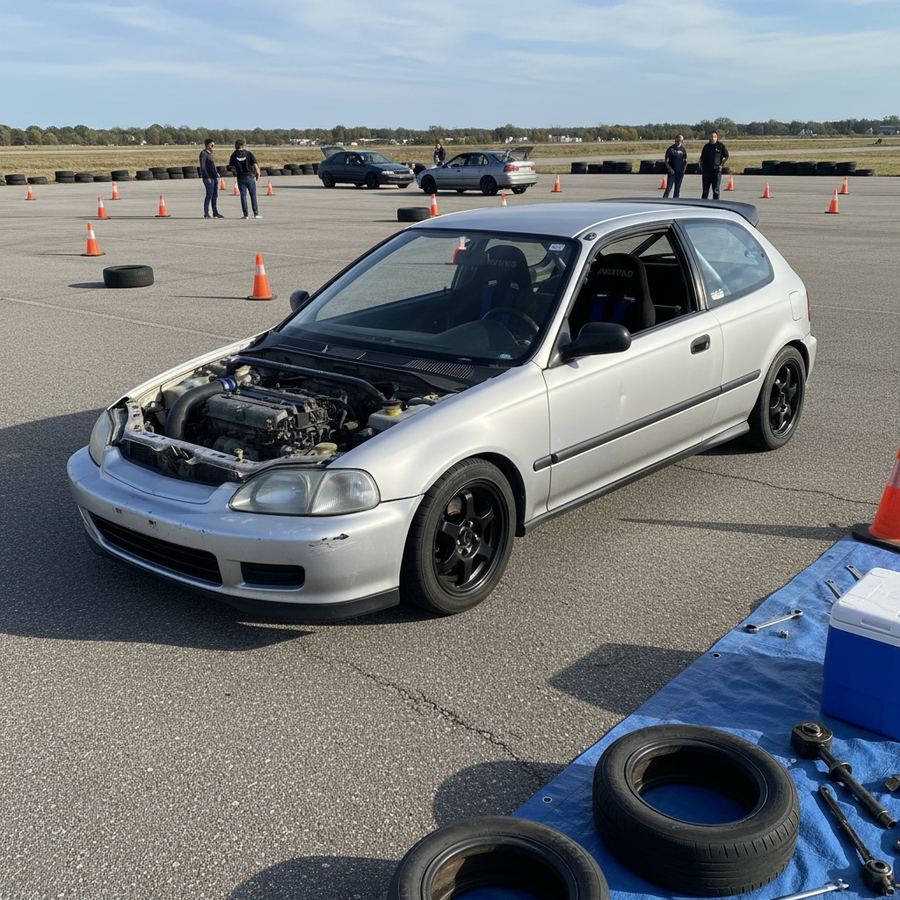
Prepping a car for events does not have to be expensive. But it does have to be done right. The difference between smart budget prep and dangerous corner-cutting comes down to knowing which parts of your car are negotiable and which ones are not. Tires can be budget-friendly. Brake fluid cannot. Wheels can be secondhand. Lug nut torque is non-negotiable.
This guide is for people who want to run autocross, rallycross, or HPDE without spending a fortune, and without showing up with a car that fails tech or puts them in trouble mid-event.
Where You Can Save Money
Used Wheels
A second set of wheels for event tires is one of the best investments in the hobby, and you do not need to buy them new. Used OEM wheels from junkyards, forums, and marketplace listings are everywhere. Most enthusiast cars share bolt patterns with other models in the same family. A set of used 17-inch OEM wheels in decent condition typically runs $200 to $400. New aftermarket wheels start at $800 or more.
Check used wheels carefully: run your finger around both lips to feel for bends. Look at bolt holes for elongation from improper torquing. Check for cracks near the spokes on alloy wheels that have been curbed hard. Cosmetic scratches are fine. Structural damage is not.
Budget Brake Pads for Autocross
Autocross runs are 60 to 90 seconds with cooldown between them. Your brakes never reach the sustained temperatures that track days generate. A good quality street pad with a slightly higher temperature rating than stock works fine. StopTech Street Performance, Hawk HPS, or EBC Yellowstuff are $80 to $150 for a set and handle autocross heat without issue. Track days are a different story, covered below.
Borrowing Helmets
Most autocross clubs have loaner helmets for newcomers. Clubs want new people to show up without needing a $200+ helmet before they know if they like the sport. Ask when you register or check the club's website. If you plan to attend more than three events, buy your own. A Snell SA2020 or SA2025 helmet starts around $180 to $250 from Zamp, Racequip, or Bell. Motorcycle helmets with Snell M ratings are not accepted at most events.
Basic Tools You Already Have
You do not need a full pit setup. A floor jack, lug wrench, tire pressure gauge, and a portable air compressor covers the essentials. Painter's tape and a marker for numbering your car costs a dollar. For a more complete list, see our event day packing guide.
DIY Fluid Changes
Brake fluid, coolant, and oil changes are straightforward jobs for anyone with basic tools. A brake fluid flush costs $15 to $30 in materials versus $80 to $150 at a shop. You need a friend, a turkey baster, clear tubing, and a wrench that fits your bleeder valves. An hour of work saves real money and keeps your fluids fresh for every event.
Where You Cannot Cut Corners
Brake Fluid
The most important fluid on your car for event use. Brake fluid absorbs moisture over time, lowering the boiling point. When it boils, vapor forms in the lines. Vapor compresses. Your pedal goes to the floor and nothing happens.
For autocross, fresh DOT 4 is sufficient. For track days, use a high-performance DOT 4 with a dry boiling point above 500 degrees Fahrenheit: ATE Typ 200, Motul RBF 600, or Castrol React SRF. Do not use old fluid. Do not skip the flush. Fresh brake fluid before every track season is a baseline requirement, not an upgrade.
Tire Condition
Budget tires are fine. Worn-out tires are not. Tires with less than 4/32 of tread are compromised, and below 2/32 they are unsafe for any performance driving. Age matters too: tires older than six years lose grip regardless of tread depth. Check the DOT date code on the sidewall. Four digits: week and year. A tire stamped 2218 was made in the 22nd week of 2018. If yours are from 2019 or earlier, they are overdue.
If you are considering used tires for events, the same condition rules apply. Age and tread depth do not get a pass because the price was right.
Lug Nut Torque
Every time you remove and reinstall a wheel, the lug nuts need to be torqued to spec with a torque wrench. Not "tight enough." Not "impact gun tight." Torque wrench, correct spec, every single time. Under-torqued lugs loosen during hard cornering. Over-torqued lugs warp rotors and stretch studs. A basic torque wrench costs $25 to $40 and lasts years. If you are prepping for an event, checking lug torque is part of the process.
Brake Pads for Track Days
HPDE and track days put sustained heat into brakes that autocross never does. Pads that are half-worn going into a track day can be gone by the end of the first session. Running pads to the backing plate means metal on rotor and zero stopping power. Check thickness before every track day. Below 50% life, replace them. Step up to pads rated for higher temperatures: Hawk HP Plus, StopTech Sport, or EBC Redstuff at minimum.
Suspension and Steering Components
A tie rod end that is slightly loose on the street becomes dangerous under hard cornering. A wheel bearing with play can overheat and seize. Before your first event of the season, jack the car up and check for play at each corner. Grab the wheel at 12 and 6, rock it, watch for clunking. Then 3 and 9. Five minutes per corner catches problems that could ruin your day.
The Budget Mindset That Works
Spend less on comfort and convenience. Spend what you need to on safety and reliability. Used wheels, budget pads for autocross, loaner helmets, and DIY fluid changes keep costs down without risk. Cheap brake fluid, bald tires, skipped torque checks, and ignored suspension wear do the opposite.
If you are unsure whether something needs attention, get it inspected. A pre-event inspection costs less than the repair bill from a failure you could have caught. Once you have the safety basics covered, look at low-cost mods that actually help to figure out where your money goes furthest.