Used Tires for Events
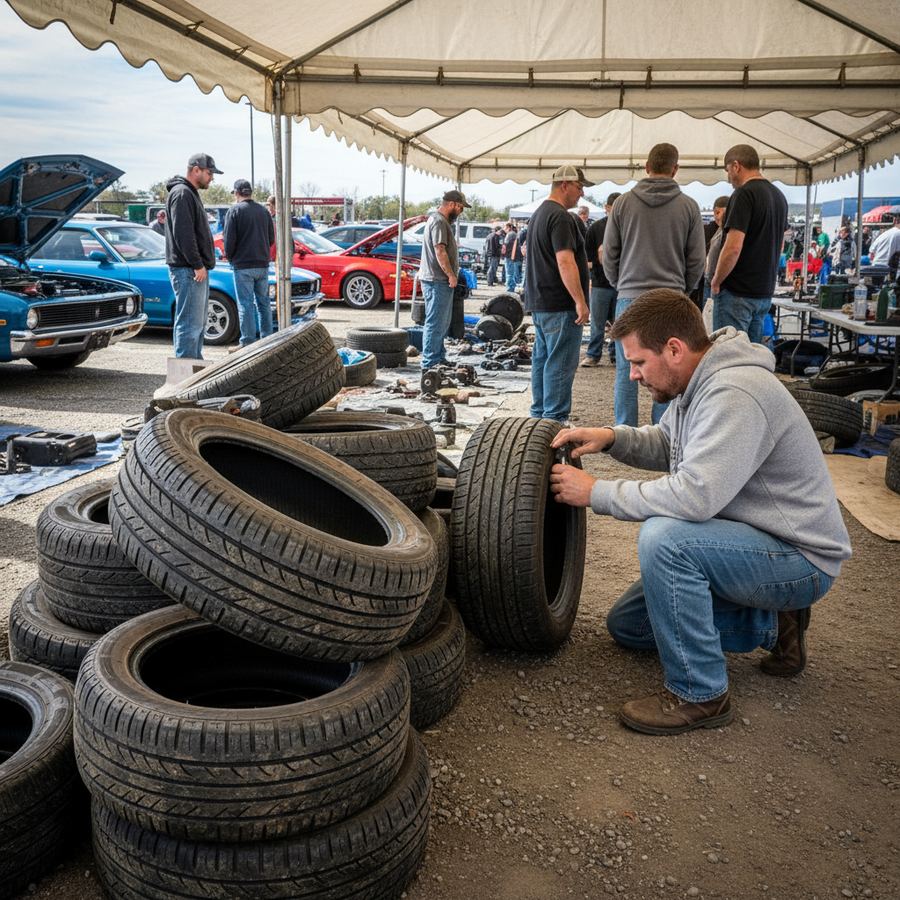
Used tires get a bad reputation, and sometimes they deserve it. But in the grassroots motorsport world, used tires can be one of the smartest purchases you make. Enthusiasts upgrade constantly. Someone moves from 200tw street tires to R-compounds and sells the old set with 80% tread left. A competitor switches brands mid-season and offloads a barely-used set at half price. Take-offs from new car purchases flood the market with OEM performance tires that have 500 miles on them.
The trick is knowing when used tires are a good deal and when they are a waste of money.
When Used Tires Make Sense
The best deals come from people who upgraded. Someone bought a BRZ, ran the stock Primacy tires for 3,000 miles, then switched to 200tw autocross rubber. Those Primacys sell for 40 to 60% of retail because they are technically used. For a beginner who wants decent tires for their first few events, this is a solid option.
The same applies to competitors who buy performance tires, run one season, and sell because they changed class or brand. A set of Continental ExtremeContact Force with 60 to 80% tread remaining still has plenty of grip for local events. You might pay $300 to $500 for a set that costs $800 to $1,000 new.
Wheel and tire packages are an even better deal. Someone builds a new wheel setup, sells the old one, and you get four wheels with mounted tires for less than the cost of new tires alone. That saves you $60 to $100 in mounting and balancing too. If the wheels fit your car, this gives you a dedicated event set so you can swap at the event and keep your daily tires fresh.
If you are brand new to autocross, a slightly worn set of used 200tw tires teaches you the same fundamentals as a brand-new set. The last 10% of tire performance does not matter when you are still figuring out the braking zones.
What to Check Before Buying
Age
Every tire has a DOT date code on the sidewall: four digits, first two are the week, last two are the year. A tire stamped 1522 was made in the 15th week of 2022. Rubber compounds degrade over time regardless of tread depth. Tires older than five years have noticeably less grip. Older than seven years, they should not be used for performance driving at all.
Do not buy used tires without checking the date code. A set with 90% tread from 2018 is not a deal. It is old rubber that looks good but grips poorly. Walk away from anything older than four years if you are buying for events.
Tread Depth
New 200tw tires typically start with 7/32 to 9/32 inches of tread. A used tire with 5/32 or more remaining has plenty of autocross life. Below 4/32, wet performance drops and overall grip declines. Use a $5 tread depth gauge and check the inside edge, center, and outside edge. Uneven wear tells you about the alignment the tire lived under. Heavy inside edge wear means aggressive negative camber. Even wear means the tire was well maintained.
Compound Condition
Run your thumbnail across the tread surface. Fresh compound feels slightly tacky and your nail leaves a mark that slowly fills in. Hard, heat-cycled compound feels glossy and your nail slides across without biting. Look for blistering, glazing, or discoloration from overheating. Tires that were cooked on a track may have permanently damaged their compound. They look fine but grip significantly less than their tread depth suggests.
Check the sidewalls for cracking, bulges, or repairs. Any sidewall damage is an immediate pass. A plugged tread puncture away from the shoulder is acceptable for autocross. For track day speeds, most experienced drivers do not risk it.
Size and Fitment
Used tires only save money if they fit your car. Verify the width, aspect ratio, and diameter match your wheels and clearances. If you are buying wider than stock, check the manufacturer's recommended wheel width range. A tire too wide for the wheel gives you a poor contact patch and less grip, which defeats the purpose.
When Used Tires Do Not Make Sense
Bald or near-bald. A tire with 2/32 or less tread is done. There is not enough rubber for meaningful grip and zero margin in wet conditions. No savings justify running tires that cannot stop your car.
Old rubber. A seven-year-old tire with full tread is worse than a two-year-old tire with half tread. Age wins. If the seller does not know the date code, pass.
Mismatched sets. Four tires of the same brand, model, size, and approximate tread depth is the goal. Mixing brands or tread depths creates inconsistent grip across the car. At the limit, that inconsistency turns into unpredictable handling. If you cannot find a matched set, wait for a better deal.
Unknown history. Tires from a stranger on marketplace with no details about use or storage are a gamble. Tires stored in direct sunlight for years have UV-degraded sidewalls. Buy from enthusiast forums and local club classifieds where sellers are forthcoming about heat cycles and conditions.
Where to Find Them
Local autocross and HPDE club forums are the best source. Facebook groups for your car's platform work too. If you show up to events regularly, you will hear about tires for sale in the paddock before they ever get listed online. Build relationships and let people know you are looking.
When to Buy New Instead
If you cannot find a matched set in good condition, in the right size, with a recent manufacture date, buying new is the better move. A fresh set has a known starting point: full tread, no heat cycles, current compound.
For new options, compare tire inventory before settling on used. Sometimes a new budget-friendly 200tw tire costs only slightly more than a used premium one, and you get double the remaining life.
Whether you go used or new, tires are the most impactful purchase for event performance. Get them right, get your pressures dialed in, and the rest of your event prep builds on that foundation.